Trestle Table to Shopfront: A Grown-Up's Checklist for Scaling a Market Brand
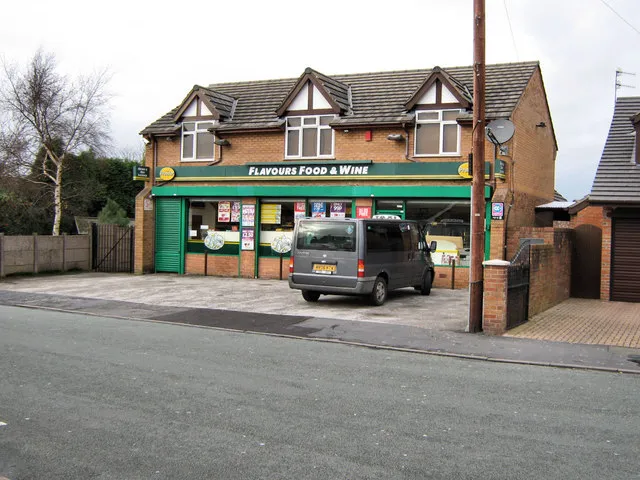
Photo: Jonathan Kington, CC BY-SA 2.0, via Wikimedia Commons
The market stall is a forgiving place to build a brand. Your regulars already know what you sell. Your packaging can be a sticker on a jar. Your tone of voice is whatever comes out of your mouth at eight in the morning. Then someone offers you a unit on the high street, and every one of those cheerful improvisations becomes a decision you have to make properly, in writing, with a deadline.
We've watched a good number of UK food and craft makers make that jump. The ones who land well tend to do the boring things early. Here's the list we go through with them.
Before you sign anything
Start with the numbers, not the branding. A shop costs money whether or not anyone comes in.
- Read the lease properly. Look for the break clause, the service charge, the repairing obligation and what happens if you want out in eighteen months.
- Visit the site at 3pm on a Tuesday, not 11am on a Saturday. You're buying the quiet hours as well as the busy ones.
- Check business rates and small business rate relief with the local authority before you model anything.
- Get public liability and product liability cover in place. Some landlords will ask for proof before keys.
- Ask what the previous tenant sold, and why they left. People are surprisingly honest about this.
Packaging: where the money quietly goes
At a stall, packaging is a bag and a bit of tissue. In a shop, it's a fixed cost per unit that you'll live with for a year. Get it right once.
- Model the unit economics at three volumes. Most makers price for 500 units and then discover the 5,000-unit price is better but the cash flow isn't.
- Register with GS1 UK for proper barcodes if you want to sell through anyone but yourself. Borrowed or homemade EANs come back to bite.
- Get the allergen information right. Under Natasha's Law, prepacked for direct sale food needs the full ingredient list with the fourteen allergens emphasised on the label itself, not on a card next to it.
- Distance selling counts too. If you're posting boxes out, allergen info must be available before the customer buys.
- Declare weight or volume and understand average quantity rules if you're packing by hand.
- Be careful with environmental claims. Recycling labels and compostable wording need to be accurate and specific, and packaging producer fees now apply to far more businesses than people expect.
- Test the pack in a chiller, in a basket, and in a rucksack. That's the actual journey.
The legal bits that catch people out
Nobody enjoys this section. Everybody who skipped it has a story.
- Register as a food business with the local authority at least 28 days before you start trading, if food is your thing.
- Trade mark your name before you commit to 10,000 printed bags. A rebrand after a cease-and-desist is the most expensive design project you'll ever run.
- Know the VAT threshold — currently £90,000 of turnover — and build it into your pricing model rather than panicking at the letter.
- Sort out music licensing if you plan to play anything in the shop, and alcohol licences if you're selling drink.
- Check advertisement consent for a fascia sign, plus landlord approval and, in a conservation area or listed building, a good deal more patience.
The shopfront has to do one job
A market stall is a conversation. A shopfront is a billboard you can't change on a whim. Give it one clear message, readable from the other side of the road: who you are, what you sell, and something that makes a passer-by slow down.
Keep the name large and the descriptor honest. Resist the urge to fill the window with six posters — a cluttered window reads as a closing-down sale. Brand the paper bags, the tissue and the tape, because that's the part that travels home and sits on someone's kitchen counter for a week.
Tone of voice: keep the voice, lose the in-jokes
Market patter doesn't scale. The jokes that land with your Saturday regulars will confuse a member of staff who started on Tuesday, and they'll certainly confuse a wholesale buyer.
Write down six sentences you'd genuinely say to a customer: how you describe what you make, why it's different, what to do with it, and what you'd never claim. That's your voice, in a form someone else can use. Keep it warm and specific. Ban the words "artisanal", "curated" and "journey" unless you can defend them under questioning.
Train the counter, not just the website
Most of the brand a customer experiences in a shop comes out of a human mouth. Give whoever is behind the till a one-page brief: the six sentences, the three questions they'll be asked most, what to say when something is out of stock, and where the allergen folder lives. Fifteen minutes of onboarding beats a forty-page brand book every time.
What to keep from the stall
The best thing about a market is that you hear the truth every week. Shoppers tell you the label is too small, the price is confusing, the name is hard to say. A shop can insulate you from that if you let it.
Keep one market a month if you can. Keep asking. Keep a notebook behind the till. The brand that scales isn't the one with the most polished guidelines — it's the one that keeps listening after it gets a front door.