Twelve People, One Logo: Getting Brand Decisions Past a Committee
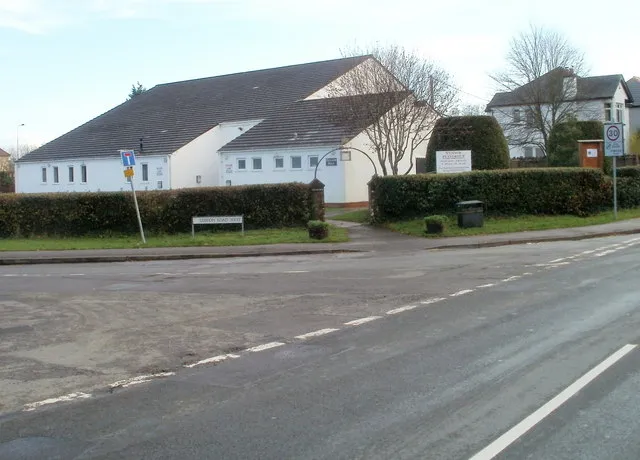
Photo: Jaggery, CC BY-SA 2.0, via Wikimedia Commons
Every so often a project arrives with a different kind of client. Not a managing director with a taste for navy, but a committee: eleven people, a treasurer, a chair, an agenda, and item seven — branding — scheduled for twenty minutes at the end of a long evening in a cold village hall.
The instinct is to design around this. Simplify everything, offer one safe option, hope nobody objects. We've come to think that's exactly backwards. Committees don't ruin brands because they have bad taste. They ruin brands because they've been handed the wrong kind of decision.
The camel problem is a process problem
A camel, as the old line goes, is a horse designed by a committee. But look closely at how that horse got made. Eleven people were asked what they wanted. Each answer was reasonable. Each was added. Nothing was ever removed, because removing someone's idea requires a conversation nobody wants to have on a Tuesday night.
Design by consensus fails for a structural reason: consensus rewards addition and punishes subtraction. Good design is mostly subtraction. So the job isn't to bypass the committee — it's to give them decisions where subtraction has already happened, and where the trade-offs are visible and honest.
Give them a decision, not a design
A committee asked to react to a logo will react to the logo. Someone will say the curve looks like a comma. Someone else will say their grandson does graphics. Forty minutes later you have eleven opinions and no direction, because 'do you like it' has no shared answer.
A committee asked to choose between three clearly described positions can actually decide. Not 'which do you prefer' but 'which of these three things are we trying to be'. Warmer or sharper. Traditional or current. Confident or friendly. Those are questions a treasurer can answer, and the answers survive the artwork changing six weeks later.
We now write a short decision sheet for every committee project: the problem in three sentences, the audience in one, the two trade-offs we've made, and what we're not doing. It gets read aloud at the start of the meeting. It takes ninety seconds and saves about three weeks.
Three options, one recommendation
Present three routes, and be explicit that one is our recommendation and why. Committees are perfectly capable of overruling a studio; what they can't do is invent a fourth route at 9.40pm that nobody has costed.
Make the three routes genuinely different in character, not three shades of the same idea. If all three are safe, the committee will try to combine them, and you'll get the camel with two humps and a lanyard. If one is clearly more distinctive, it gives the room something to be brave about — and often the most cautious member becomes the one who argues for it.
Bring the objections yourself
Before the vote, run the pre-mortem. 'In six months, someone will say this doesn't work on the fixture list.' 'Someone will say it looks nothing like the old badge.' 'Someone will ask why we spent money on this when the boiler needs replacing.' Say them out loud, with answers.
This sounds like self-sabotage. It's the opposite. An objection you raise is a considered risk. An objection raised from the floor is a crisis. Committees are risk-averse bodies by design — they exist to prevent things going wrong — so the studio that names the risks first reads as competent rather than reckless.
Write the rule, not the artwork
A committee's real legacy isn't the logo. It's the guidance that outlives the people who approved it. So we spend disproportionate effort on a single-page set of rules: which typeface, which two colours, how much clear space, what to do when someone's cousin offers to knock up a poster.
That last one matters more than you'd think. Most small organisations don't fall apart because their logo is wrong. They fall apart because every fundraiser, every away fixture and every summer fair gets a homemade poster in a different font, and after three years there's nothing recognisable left to protect.
A useful rule sounds like this: 'Fundraising posters use the template. If it's not on the template, it goes to the secretary first.' Short, enforceable, and it removes the awkwardness of telling a volunteer no.
The keeper of the decisions
One last piece of process. After the vote, we write a decisions log — a plain list of what was agreed, what was rejected and why, dated, and circulated to everyone in the room. It's not bureaucracy; it's protection. It stops the same debate reopening in March, and it gives whoever inherits the role next something better than folklore.
Committees are not the enemy of good design. They're the reason community organisations exist at all, and a brand that twelve people genuinely own will be used far more faithfully than one a single director imposed. The trick is to respect the group enough to give them a properly framed choice — and to keep the framing, the trade-offs and the rules clear enough that the room can't accidentally design a camel.
Bring three real options, name the risks out loud, and leave with a decision on record. That's a good Tuesday night in a cold hall.